What your tears are actually made of
By Ally Daoud, Australian Optometrist and Dermii Co-founder
The short answer
Tears are made of three layers. A thin mucus layer that holds everything against the surface of the eye, a watery middle layer and a layer of oil on top. The oil comes from about thirty small glands along the edge of each eyelid. Without that oil, the watery layer evaporates in seconds rather than minutes.
Most people have never been told this. They have been told their eyes are dry and to use a drop, which is water, for a problem that is usually not about water at all.
What are the three layers of tears?
Working from the eye outwards:
The mucus layer. Thin and sticky. It sits directly against the surface of the eye and its job is to help everything above it spread evenly and hold on. Without it, tears would bead up and run off.
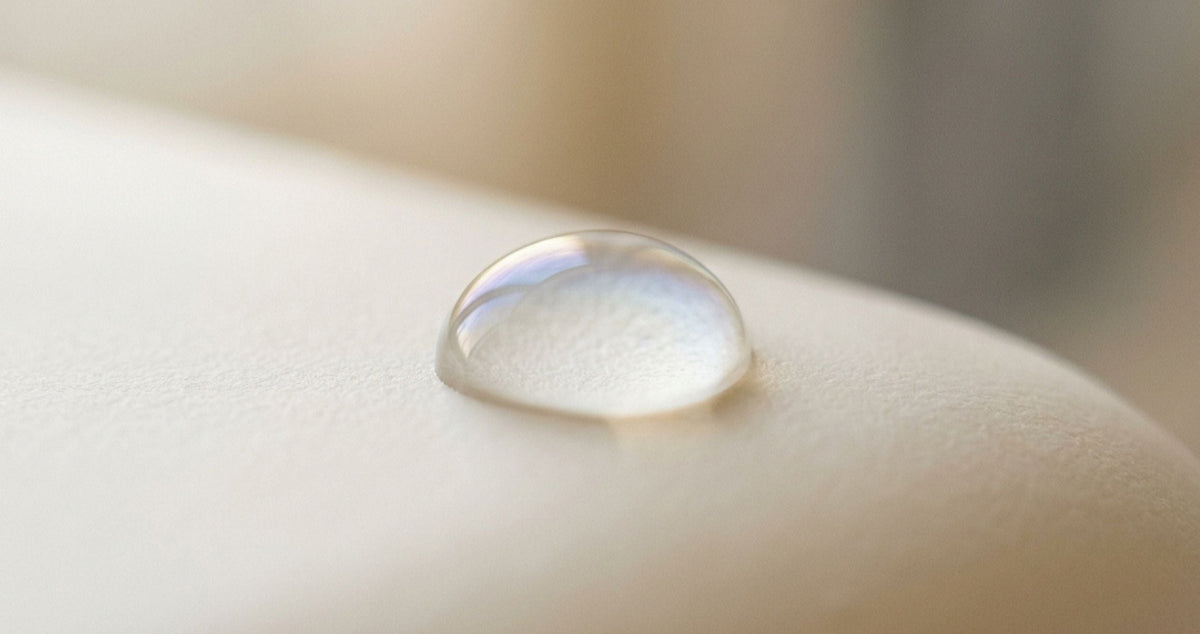
The watery layer. The thickest of the three and the one people picture when they think of tears. It carries oxygen and nutrients across the surface of the eye and washes away small debris.
The oil layer. The thinnest by far, sitting right on top, a few molecules deep. It works like a lid. It slows the watery layer underneath from evaporating into the air.
Three layers, each depending on the one below it. When they are all working, a tear film stays stable for ten seconds or more between blinks. That is long enough that you never notice it.
Which layer is usually the problem?
Almost always the oil layer.
This surprises people, because the sensation is dryness and dryness sounds like a water shortage. But in most cases the watery layer is being produced perfectly well. It is just not staying there.
Take the oil away and the watery layer underneath is exposed. It evaporates fast. Your eye goes from comfortable to gritty between blinks, over and over, all day.
That is the difference between a tear film that breaks down in three seconds and one that holds for ten.
Where does the oil come from?
From small glands packed along the edge of each eyelid, right at the base of the lashes. Roughly thirty in the upper lid, slightly fewer in the lower. You have them right now, top and bottom, on both eyes.
Each one is a narrow channel that runs up through the lid and opens onto the very edge, just behind the lashes. They sit in a neat row. If you look closely at your own lid margin in a mirror you can sometimes see the openings as a faint line of tiny dots.
They do not drip. The oil is squeezed out. Every time you blink, your lids press together and press on the glands, and a small amount of oil is released onto the eye. The blink then spreads it across the surface like a windscreen wiper.
So the delivery system is the blink. That matters more than people expect, because a normal blink rate is 12 to 15 a minute and looking at a screen drops it to 5 to 7.
Why doesn't adding more water help?
Because you are topping up the layer that was not failing.
An eye drop puts water on the surface of the eye. That genuinely feels better, and it is not nothing. For about twenty minutes the surface is wetter than it was.
Then it evaporates, for exactly the same reason it was evaporating before. The oil layer that is meant to slow that down is still thin. So you are back where you started and you reach for the bottle again.
This is why people cycle through brand after brand looking for the one that lasts. None of them last, because the problem is not the drop. A drop is designed to add water to the surface. It is doing its job. It just cannot reach the edge of your eyelid, where the oil comes from.
What happens when the glands stop releasing oil properly?
Slowly, and over years.
The oil in a gland that is not being emptied regularly does not stay thin and clear. It thickens. Think of the difference between butter straight out of the fridge and butter that has been sitting on the bench. Same substance, completely different behaviour.
Thickened oil does not move easily when you blink. It sits in the channel. Debris, old makeup and dead skin collect over the opening on the lid margin, and the opening narrows. Less oil comes out per blink, so the tear film gets less stable, so the eye feels worse.
None of this happens overnight. It is why chronic gritty, tired, burning eyes tend to creep up on people in their forties and fifties rather than arriving suddenly.
What can you do about it?
Two things affect thickened oil, and both are physical rather than chemical.
Warmth. Sustained warmth softens oil so it can move again. The important word is sustained. A warm flannel is back to room temperature within about three minutes, which is nowhere near long enough. We put a thermometer on one.
Cleaning the lid margin. The strip at the base of the lashes where the glands open. Most people wash their face around this strip rather than along it, so build-up stays put over the openings. How to clean your eyelids properly.
Done daily, the two together give the glands a reasonable chance of releasing oil the way they are meant to. It is a routine rather than a one-off, in the same way brushing your teeth is a routine.
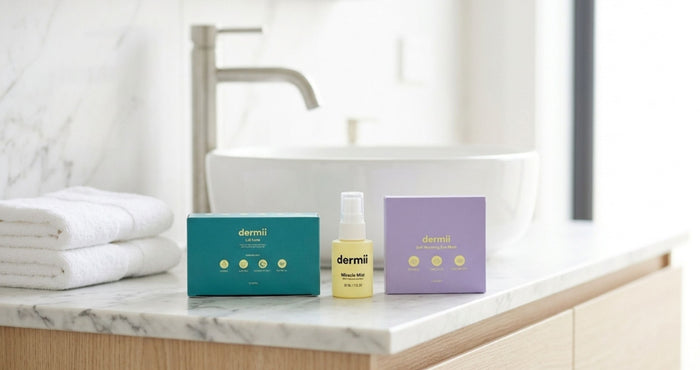
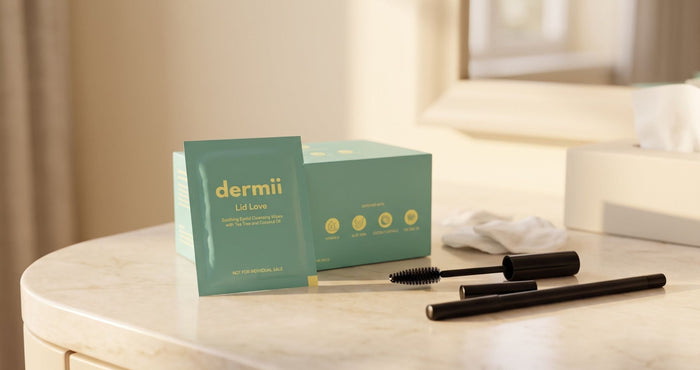
In our own routine that is a cleansing wipe along the margin, a hypochlorous acid mist on closed lids and a self-warming mask for the warmth. The Lid Lover Starter Bundle is all three for thirty days.
It is also not quick. Oil that has thickened over years does not shift in a week, and most people notice a change somewhere between week two and week three.
When to see an optometrist
Have your eyes looked at properly if you have eye pain, sudden changes to your vision, sensitivity to light, coloured or sticky discharge or if one eye is clearly different from the other. Those are not things to work through at home.
The same goes if your eyes have been uncomfortable for months and nothing has shifted. There is more that can be looked at in a chair than you can see in a bathroom mirror.
Frequently asked questions
What are tears made of? Tears are made of three layers. A thin mucus layer against the surface of the eye, a watery middle layer and a thin layer of oil on top. The oil comes from around thirty small glands along the edge of each eyelid.
Why do my tears evaporate so quickly? Usually because the oil layer on top of the tear film is too thin. That oil layer slows evaporation. When the glands along the lid margin release less oil, the watery layer underneath evaporates in seconds rather than minutes.
Which layer of tears causes dry eyes? In most cases the oil layer. The watery layer is often being produced normally, but without enough oil on top it does not stay on the eye.
Do eye drops replace the oil layer? Most standard eye drops add water to the surface of the eye rather than oil. That is why relief from a drop often lasts around twenty minutes before the eye feels dry again.
Where are the oil glands in your eyelid? Along the edge of each eyelid, at the base of the lashes. There are roughly thirty in the upper lid and slightly fewer in the lower lid, and they open onto the lid margin just behind the lash line.
Keep reading
- Why are my eyes worse in the afternoon?
- Why your eyes water and feel dry at the same time
- Eye drops vs lid hygiene, the actual difference
About the author: Ally is a practising optometrist in Australia and the co-founder of Dermii, an Australian lid-hygiene brand. The information in this article is general and is not a substitute for clinical advice. If you’re concerned about your eye health, please see your optometrist or GP.
Try the 30 Day Challenge
Angry, gritty, tired eyes don't need another drop. They need the layer underneath sorted out.
Do the full 30 day routine. Wipe, mist, mask. If your eyes aren't calmer and more comfortable at the end of it, tell us and you get your money back. First Bundle, one per customer.
The next cohort starts weekly from 12th October.
If your eyes are painful, your vision has changed, or redness won't settle, see an optometrist or eye care professional.